A Dual-attention Embedded CNN Model for Estimating Mixed Layer Depths in the Bay of Bengal

2025年3月19日·
贾文韬
贾文韬
,
Xun Gong
朱善良
朱善良
Corresponding
,
Jifeng Qi
Corresponding
周献梅
周献梅
姚恒恺
姚恒恺
宫响
宫响
,
Wenwu Wang
· 1 分钟阅读时长
PDF DOI
Image credit: Wentao Jia
摘要
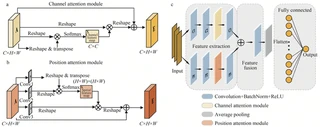
Variations in ocean mixed layer depth (MLD) show a significant impact on energy balance in the global climate systems and marine ecosystems. So far, the accuracy of modeling MLD, especially in the region with complex ocean dynamics, remains a challenge. This thus calls for an emergency using Artificial intelligence (AI) approach to improve the assessment of the MLD. In this study, we introduce a novel convolutional neural network model based on a dual-attention module (DA-CNN) to estimate the MLD in the Bay of Bengal (BoB) by integrating multi-source remote sensing data and Argo gridded data. Compared with the original CNN model, the DA-CNN model exhibits superior performance with notable improvements in the annual average RMSE and R2 values by 13.0% and 8.4%, respectively, while more accurately capturing the seasonal variations in MLD. Moreover, the results using the DA-CNN model show minimum RMSE and maximum R2 values, in comparison to the calculation by the random forest (RF), neural network (ANN) model, and the Hybrid Coordinate Ocean Model (HYCOM). Accordingly, our findings suggest that the newly developed DA-CNN model provides an effective advantage in studying the MLD and the associated ocean processes.
类型
出版物
Journal of oceanology and limnology
publications

Variations in ocean mixed layer depth (MLD) show a significant impact on energy balance in the global climate systems and marine ecosystems. So far, the accuracy of modeling MLD, especially in the region with complex ocean dynamics, remains a challenge. This thus calls for an emergency using Artificial intelligence (AI) approach to improve the assessment of the MLD. In this study, we introduce a novel convolutional neural network model based on a dual-attention module (DA-CNN) to estimate the MLD in the Bay of Bengal (BoB) by integrating multi-source remote sensing data and Argo gridded data. Compared with the original CNN model, the DA-CNN model exhibits superior performance with notable improvements in the annual average RMSE and R2 values by 13.0% and 8.4%, respectively, while more accurately capturing the seasonal variations in MLD. Moreover, the results using the DA-CNN model show minimum RMSE and maximum R2 values, in comparison to the calculation by the random forest (RF), neural network (ANN) model, and the Hybrid Coordinate Ocean Model (HYCOM). Accordingly, our findings suggest that the newly developed DA-CNN model provides an effective advantage in studying the MLD and the associated ocean processes.

贾文韬
Authors
2022级数学硕士研究生
青岛科技大学数学专业硕士,中国地质大学(武汉)海洋学院海洋科学专业博士研究生,主要研究方向为海洋数据智能分析、海洋环境模拟和预测。
Authors
朱善良
Authors
正教授
博士,教授,硕士生导师,人工智能技术海洋场景化应用山东省工程研究中心副主任,青岛市人工智能海洋技术创新中心副主任,青岛科技大学数学与交叉研究院副院长。山东赛区数学建模竞赛专家组成员、山东省数学会理事、山东省应用统计学会理事、人工智能海洋学专业委员会委员。近年来,主持或参与国家自然科学基金、省自然基金、省教改项目等各类教学科研项目20多项,在国内外期刊发表学术论文80余篇,其中被SCI、EI检索70余篇,参编教材1部。指导学生参加全国大学生数学建模竞赛、中国研究生数学建模竞赛、美国大学生数学建模竞赛等各类竞赛获国家一等奖9项、国家二等奖29项、国家三等奖13项、山东省一等奖37项、山东省二等奖12项、山东省三等奖7项。指导本科生参加国家大学生创新计划项目4项。
Authors
周献梅
Authors
2022级数学硕士研究生
青岛科技大学数学专业硕士,主要研究方向为海洋次表层温盐场反演
姚恒恺
Authors
讲师
现为 青岛科技大学 数学与物理学院讲师。他获得了 中国海洋大学物理海洋学 博士学位。他的研究兴趣包括中尺度涡、海洋建模和人工智能海洋学。他是 人工智能海洋学团队 成员,致力于海洋大数据、海洋模拟和海洋预测的开发。他还是 青岛澳可富净水科技 的首席科学家。
宫响
Authors
副教授
中国海洋大学博士,博士后,现任数学系副主任兼应用数学教研室主任,青岛市人工智能海洋技术创新中心骨干,发表高水平论文40余篇,承担国家自然科学基金、国家博士后基金、青岛市博士后基金以及人工智能技术开发项目等10余项。多次获得“青岛科技大学先进工作者”、“青岛科技大学先进女职工”、青岛科技大学毕业生“我最喜爱的教师”等荣誉称号;指导本科生和研究生参加数学建模竞赛,获得省级以上奖项10余项;主持参与多项研究生和本科生课程教改项目。
Authors