Deep Sequence Learning for Prediction of Daily NO2 Concentration in Coastal Cities of Northern China
2023年2月27日· ,,,,,·
0 分钟阅读时长
,,,,,·
0 分钟阅读时长
Xingbin Jia
宫响
Corresponding
,Xiaohuan Liu
Xianzhi Zhao
He Meng
Quanyue Dong
Guangliang Liu
Huiwang Gao
摘要
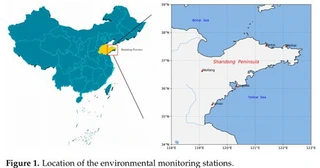
Nitrogen dioxide (NO2) is an important precursor of atmospheric aerosol. Forecasting urban NO2 concentration is vital for effective control of air pollution. This paper proposes a hybrid deep learning model for predicting daily average NO2 concentrations on the next day, based on atmospheric pollutants, meteorological data, and historical data during 2014 to 2020 in five coastal cities of Shandong peninsula, northern China. A random Forest (RF) algorithm was used to select input variables to reduce data dimensionality trained by the sequence to sequence (Seq2Seq) the model and describe how the Seq2Seq model understands each predictor variable. The hybrid model combining an RF with Seq2Seq network (RF-S2S) was evaluated and achieved a Pearson’s correlation coefficient of 0.93, a Nash-Sutcliffe coefficient (NS) of 0.79, a Root Mean Square Error (RMSE) of 5.85 mu g/m(3), a Mean Absolute Error (MAE) of 4.50 mu g/m(3), and a Mean Absolute Percentage Error (MAPE) of 20.86%. Feature selection by an RF model improves the performance of the Seq2Seq model, reducing errors by 19.7% (RMSE), 20.3% (MAE), and 29.3% (MAPE), respectively. Carbon monoxide (CO) and PM10 are two common, important features influencing the prediction of NO2 concentrations in coastal areas of northern China. The results of RF-S2S models can capture general trends and disruptions more accurately than can long-short term memory (LSTM) models with and without feature selection. The decreasing tendency of NO2 from 2014 to 2020 illustrated by the empirical mode decomposition (EMD) method is one important obstacle to improving the RF-S2S prediction accuracy. An EMD-based RF-S2S model could help to perform the short-term forecast of NO2 concentrations efficiently.
类型
出版物
Atmosphere
Authors

Authors
副教授
中国海洋大学博士,博士后,现任数学系副主任兼应用数学教研室主任,青岛市人工智能海洋技术创新中心骨干,发表高水平论文40余篇,承担国家自然科学基金、国家博士后基金、青岛市博士后基金以及人工智能技术开发项目等10余项。多次获得“青岛科技大学先进工作者”、“青岛科技大学先进女职工”、青岛科技大学毕业生“我最喜爱的教师”等荣誉称号;指导本科生和研究生参加数学建模竞赛,获得省级以上奖项10余项;主持参与多项研究生和本科生课程教改项目。
Authors
Authors
Authors
Authors
Authors
Authors